One Platform to Rule the Supply Chain? Why the Future Belongs to Orchestrators
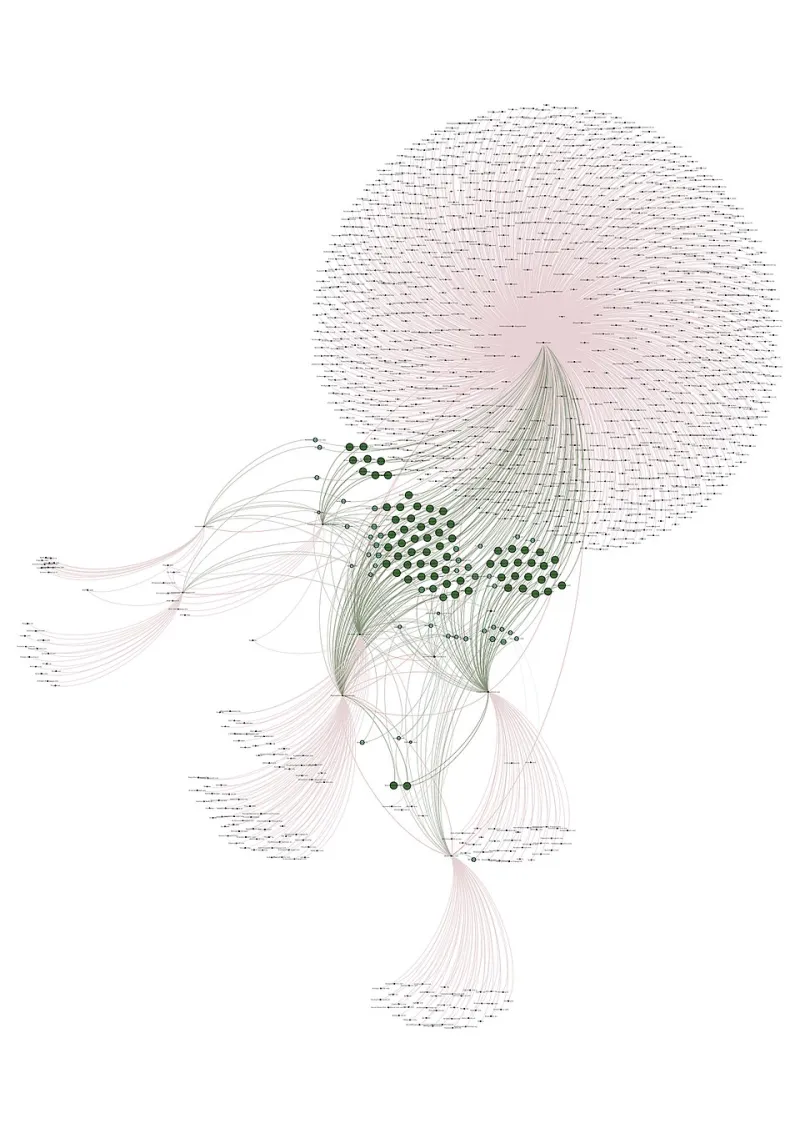
Photo: MayaAndersonGonzalez, CC BY-SA 4.0, via Wikimedia Commons
Every few years, the software industry rediscovers the same promise: one platform that will run your entire supply chain. Procurement, sourcing, logistics, visibility, payments, supplier management — all under a single login, a single data model, a single vendor relationship. The pitch is compelling, particularly for operations leaders exhausted by integration projects and dashboards that disagree with each other.
It is also, in my view, the wrong destination. The future of B2B supply chain technology belongs not to monopolies but to orchestrators — platforms whose core competency is making other platforms work together.
The Case for the Super App — and Why It Fails in Practice
The appeal of the all-in-one platform is real. Unified data eliminates the reconciliation tax that fragmented stacks impose. A single vendor means a single throat to choke when something breaks. And for mid-market companies without large IT teams, simplicity has genuine operational value.
But the super app model runs into three stubborn realities of B2B commerce:
First, the supply chain is not one problem. Sourcing, freight, warehousing, trade compliance, and payments are distinct domains with distinct data structures, regulatory regimes, and pace of innovation. No single vendor can be best-in-class at all of them. The all-in-one platform is inevitably best-of-breed at one or two things and adequate at the rest — and 'adequate' in logistics is expensive.
Second, lock-in compounds. When your procurement data, your freight rates, your supplier scorecards, and your payment rails all live in one system, the switching cost grows with every quarter of usage. What begins as convenience becomes leverage — and pricing reflects it. Companies that built their operations on monolithic ERPs learned this lesson the hard way over the past decade.
Third, innovation flows around monoliths. The most interesting advances in supply chain technology — AI-driven freight procurement, digital freight networks, embedded trade finance — are emerging from focused point solutions, not from incumbent suites. A super app customer waits for their vendor to build or buy that capability. An orchestrated stack plugs it in next quarter.
The Orchestrator Alternative
Orchestration platforms take the opposite bet: rather than replacing your systems, they sit above them, normalizing data, routing workflows, and providing a unified control plane. The orchestration layer is where a purchase order in your procurement system triggers a booking in your TMS, updates your inventory position, and reconciles against your AP ledger — without any of those systems talking directly to each other.
The distinction matters because it changes where the power sits. In the super app model, the vendor owns your operating picture. In the orchestration model, you do.
A Framework for Deciding Your Own Stack
Before committing to either direction, ask four questions:
- Where does my complexity actually live? If 80 percent of your pain is in freight, buy best-of-breed freight technology and orchestrate the rest. Match investment to your actual bottleneck, not the vendor's product map.
- What is my real switching cost today? Calculate it honestly — data migration, retraining, process redesign. If it's already prohibitive, that itself is an argument for adding an orchestration layer rather than deepening a single dependency.
- Who owns my data, contractually? Insist on exportability, defined data formats, and API access as non-negotiable terms regardless of vendor.
- Can this architecture absorb a new capability without a project? If adding a promising new tool requires a twelve-month integration initiative, your stack is too rigid.
The Position
The all-in-one supply chain super app will continue to be sold, and some companies will buy it, and some will even be satisfied. But the organizations that compete hardest over the next decade will be those that treat their technology stack the way strong operators treat their supplier base: diversified, contractually protected, and coordinated by a layer they control.
Bridges, after all, don't ask you to demolish the cities on either side. They connect them.