Screwed Together in Ohio: The Sub-Tier Origin Audit Behind a Credible Reshoring Claim
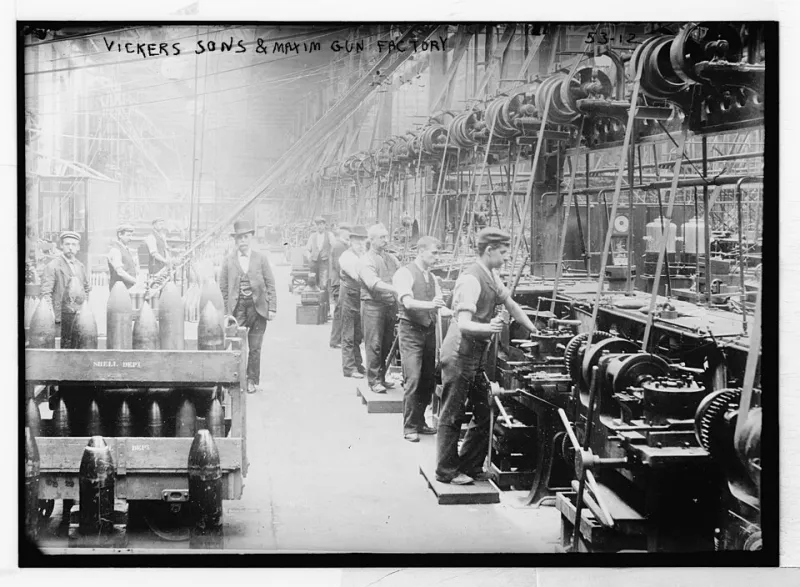
Photo: Bain News Service, publisher, Public domain, via Wikimedia Commons
A supplier's origin declaration arrives with the quote, states "Made in USA," and the sourcing team files it. Eighteen months later a customer, a regulator, or a trade compliance auditor asks a simple question: where was the product actually manufactured? The honest answer is that the final assembly happened in Ohio, and most of what went into it did not.
Reshoring programs have accelerated across US manufacturing and distribution, and with them the volume of origin claims flowing through procurement. Some are accurate. Some are optimistic. A meaningful number are the product of genuinely confused suppliers who do not know which rulebook the buyer is applying.
Three rulebooks, three different answers
Before requesting documentation, determine which standard governs the claim. They are not interchangeable.
Marketing claims. The Federal Trade Commission's Made in USA Labeling Rule requires that a product be "all or virtually all" made in the United States — meaning domestic content dominates and any foreign content is negligible. This is a strict standard, and it applies to labels and advertising, not to customs entry.
Customs marking. US Customs and Border Protection determines country of origin by substantial transformation: the country where the article emerges with a new name, character, or use. Assembly of imported components frequently does not qualify.
Government procurement. The Buy American Act and Trade Agreements Act impose their own domestic-content and country-of-origin tests, which differ again from both of the above.
A supplier that answers "yes" to a general origin question may be answering a different question than the one the buyer asked. Precision at the outset prevents expensive corrections later.
Where assembly and manufacture diverge
The substantial-transformation test is the crux of most disputes. Driving screws into an imported subassembly in a US facility does not typically create a new article. Machining a component from domestic raw material, or combining components into a product with fundamentally different characteristics and function, may. The distinction turns on operations, not on the address of the building.
That is why a signed letter is insufficient evidence on its own and why a bill-of-materials walk is essential.
The audit sequence
Define scope by exposure. Rank product families by the value of the claim at stake — revenue carrying a domestic-content promise, contracts with origin conditions, and SKUs marketed on American-made positioning. Audit the top tier first.
Walk the BOM to the point of stability. Trace components to tier three, or to the tier at which a component's origin is unlikely to change. Focus on the high-value and high-risk items rather than attempting exhaustive coverage.
Map cost lines to countries. A product's domestic-content share is a cost question before it is a compliance question. Reconcile each significant cost line — material, labor, overhead, and purchased subassemblies — to a country of origin.
Request evidence, not assertions. Ask for component-level declarations, mill certifications where relevant, purchase records for foreign inputs, and a written narrative of the transformation performed domestically. A one-page letter with no component breakdown is a starting point for follow-up, not a conclusion.
Verify on the floor. Confirm that the operations described in the narrative actually occur at the stated facility, with the stated equipment and headcount. Origin claims that cannot be reconciled to a production line are the ones that fail under scrutiny.
Document and date-stamp. Record the evidence base, the methodology, and the date of verification. Origins change when suppliers change sub-tier sources, and a stale file is a liability disguised as an asset.
Red flags worth escalating
- Declarations using "assembled in USA" or "built in America" without a defined standard
- Domestic-content percentages offered without a methodology
- A single declaration covering an entire product catalog
- Origin changes that appear immediately after a competitive re-bid
- Component pricing that is implausible for the claimed country of origin
Building origin into sourcing rather than after it
The sustainable approach embeds verification in the sourcing workflow instead of running it as a retrospective project. Add a tiered origin disclosure to the RFQ question set, scaled to the materiality of the award. Write representations, warranties, change-notification obligations, and indemnification into the purchase agreement so that a sub-tier shift triggers disclosure rather than surprise. Capture origin data as a structured field in supplier records rather than a PDF in a shared drive, and re-verify on an annual cadence with event-based triggers for new facilities, new sub-tier sources, and ownership changes.
Procurement teams resist these steps because they slow the award. The counterargument is straightforward: a claim that cannot be substantiated is a contingent liability with an unknown maturity date, and the cost of resolving it after the fact is borne by the buyer who accepted the certificate at face value.