Net 90 and the Invisible Loan: Five Signals Your Payment Terms Are Financing Someone Else's Business
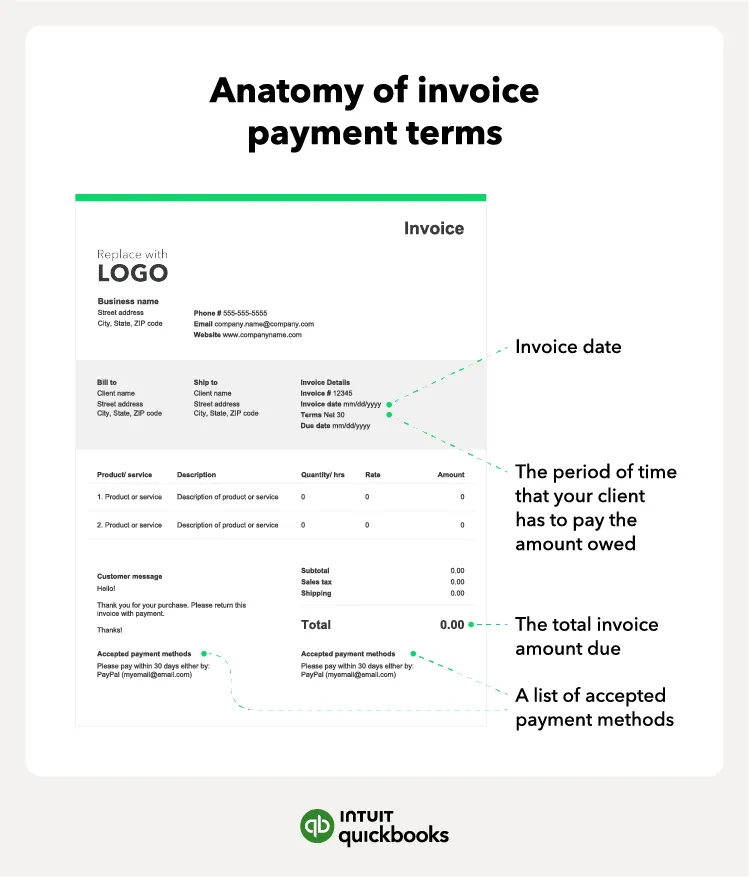
Photo: corporate finance invoice payment terms office desk, via quickbooks.intuit.com
There is a persistent fiction in American procurement that payment terms are free money. Stretch a supplier from Net 30 to Net 90, the reasoning goes, and the CFO smiles while nobody pays a dime.
The dime gets paid. It's simply paid invisibly—in supplier pricing that bakes in a cost of capital, in quotes declined by vendors who can't afford to wait, and in the gradual narrowing of the supplier pool to firms with balance sheets strong enough to act as your lender. Extended terms are a loan, whether or not anyone calls them one. And like most unpriced loans, the burden falls unevenly.
Who Actually Pays
Large suppliers with access to cheap credit can absorb Net 90 without much pain. Small and mid-sized suppliers—the innovative, hungry firms that often bring the best pricing and freshest ideas—cannot. They either decline the business, raise their prices to cover bridge financing, or take on expensive debt to survive your terms. Studies of corporate payment practices have repeatedly shown that when large buyers extend terms, supplier costs rise roughly in proportion, and those costs come straight back through the pricing door.
In other words: your terms policy may be a hidden tax on your own landed costs.
Five Signals Your Terms Are Working Against You
1. Your supplier base is skewing large. If your qualified vendor list has quietly consolidated toward big, well-capitalized firms, ask why. Often it's not a strategic choice—it's that smaller vendors did the math on your terms and walked away before you ever saw their quote.
2. Pricing quotes come back padded. When suppliers don't know how long you'll actually take to pay, they price for the worst case. If your actual payment behavior is better than your stated terms, you're paying a risk premium you don't need to. If it's worse, the padding is earned.
3. Payment terms have become a negotiation battlefield. When every sourcing event turns into a fight over Net 60 versus Net 90, it usually means price and terms have become entangled—suppliers raising prices to fund the terms you're demanding. You're negotiating with yourself across the table.
4. Your early-payment discounts are mispriced. The traditional 2/10 Net 30 discount equates to an annualized return north of 36%—extraordinary by any standard. If you're not systematically capturing discounts that rich, your treasury is leaving guaranteed returns on the table. If your discounts are much thinner than that, you're likely overpaying for the capital you're providing.
5. Suppliers are asking for relief at renewal. When vendors request shorter terms, early-pay options, or surcharge clauses during contract negotiations, they're telling you something important: your terms are a line item in their cost structure, and it's coming back to you one way or another.
Alternatives That Keep Both Sides Liquid
The good news is that the tools for decoupling working capital from payment terms are mature and widely available in the US market.
Dynamic discounting lets buyers pay early in exchange for a sliding-scale discount, funded by the buyer's own (typically cheap) capital. The supplier gets cash in days; the buyer earns a return that beats most treasury alternatives.
Supply chain finance (sometimes called reverse factoring) brings a bank or fintech into the middle: the supplier gets paid early at a financing rate anchored to the buyer's credit rating, not the supplier's. This works well for investment-grade buyers but has drawn scrutiny—accounting rulemakers now require careful disclosure, so treat it as a financing arrangement, not free money.
Terms tiering is the simplest intervention of all: offer Net 30 with a discount option to small suppliers who need liquidity, and reserve extended terms for large vendors who genuinely don't mind. One-size-fits-all terms punish exactly the suppliers you can least afford to lose.
The Honest Accounting
None of this argues for paying every invoice in ten days. Working capital management is legitimate, and suppliers negotiate terms with full knowledge of what they mean. The argument is for honesty: recognize that terms are a financing transaction, price them like one, and stop pretending the money is free.
The buyers who figure this out first gain a quiet advantage—a broader supplier pool, sharper pricing, and vendor relationships built on something sturdier than a stretched invoice.