What Your 3PL Isn't Telling You: The Layered Cost Structure Quietly Eroding Your Logistics Margins

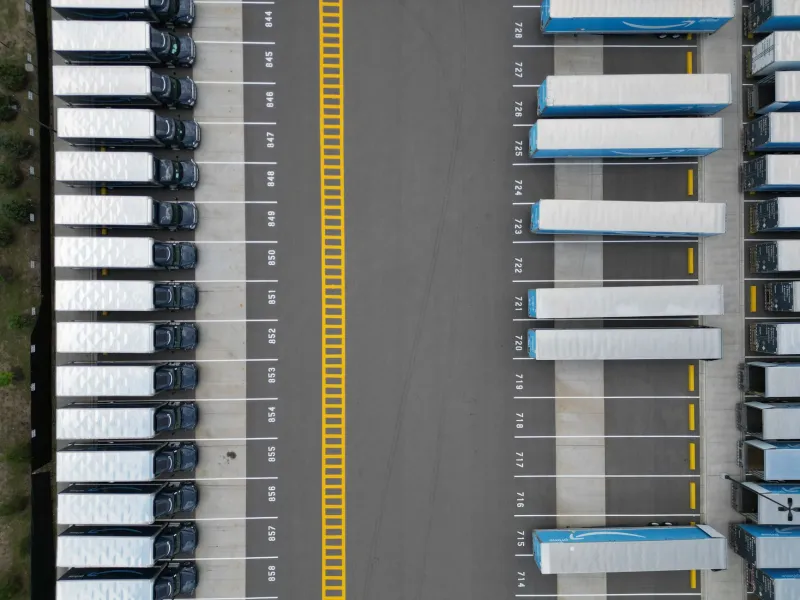
Photo: RhôneA7, CC BY 4.0, via Wikimedia Commons
For many B2B organizations, the third-party logistics provider occupies a peculiar position in the supply chain: simultaneously indispensable and poorly understood. Procurement teams negotiate freight rates, sign master service agreements, and then largely step back, trusting that the 3PL is managing fulfillment competently on their behalf. That trust, while operationally convenient, can be financially costly.
The problem is not that 3PL providers are inherently extractive. Many deliver genuine value — carrier relationships, warehouse infrastructure, customs expertise, and technology platforms that would be prohibitively expensive to replicate internally. The problem is that the true cost of that value is rarely transparent, and the gap between what buyers assume they are paying and what they are actually paying can be substantial.
The Anatomy of a 3PL Invoice
Most 3PL contracts are structured around base freight rates — a number that is visible, negotiable, and easy to benchmark. What surrounds that number, however, is considerably more opaque.
Accessorial charges represent one of the most significant sources of untracked cost. These include fees for residential delivery, liftgate service, inside delivery, fuel surcharges, extended area surcharges, and a growing list of carrier-imposed assessments that 3PLs pass through — sometimes with their own markup applied on top. A shipper focused exclusively on the base rate may find that accessorials account for 20 to 40 percent of total freight spend, depending on their lane mix and delivery profile.
Beyond freight, warehousing agreements frequently contain embedded cost structures that compound over time. Storage fees calculated on cubic footage rather than pallet positions, receiving charges assessed per line item, and minimum monthly billing thresholds can collectively inflate the effective cost of warehousing well beyond the headline rate. When inventory velocity slows — as it does during demand downturns or product transitions — these fixed-cost structures become particularly punishing.
Then there is the margin layer that 3PLs apply to carrier rates. Most providers do not pass through carrier pricing at cost. They negotiate volume discounts with carriers, then price their services to clients at a markup. In many cases, this is entirely legitimate: the 3PL is monetizing carrier relationships that individual shippers could not replicate at comparable volume. But buyers who do not understand the spread between carrier cost and billed rate cannot evaluate whether that spread reflects fair market compensation or excess extraction.
Mapping the Value-Extraction Ratio
The critical question is not whether your 3PL is earning a margin — it is whether the margin they earn corresponds to value they are genuinely creating. A useful analytical framework involves mapping every cost component in your logistics relationship against a specific value attribution.
Begin by requesting a complete fee schedule from your provider, including all accessorial categories, storage rate structures, and any technology or management fees embedded in the agreement. Many contracts allow 3PLs to introduce new fee categories with limited notice; a thorough audit often surfaces charges that were introduced quietly and never formally communicated.
Next, benchmark each component against market alternatives. Freight audit and payment firms can provide carrier rate benchmarking. Warehouse cost consultants can compare your storage pricing against regional market rates. The goal is not to eliminate your 3PL relationship but to understand where that relationship is competitively priced and where it is not.
Finally, evaluate the services your 3PL provides that you could not efficiently replicate. Carrier negotiation leverage, returns processing infrastructure, and regulatory compliance expertise are examples of genuine value that justifies premium pricing. Administrative markup on pass-through charges with no corresponding service delivery is not.
When Direct Relationships or Alternative Models Make Sense
For some shipping lanes and freight categories, the calculus shifts decisively toward direct carrier relationships. Large shippers with predictable, high-volume lanes often find that contracting directly with asset-based carriers — rather than routing through a broker or 3PL — produces meaningful cost savings without sacrificing service reliability. The threshold varies by organization, but companies moving more than several thousand shipments annually on core lanes should routinely evaluate direct contracting as an alternative.
The rise of digital freight platforms has also introduced a third option between traditional 3PLs and direct carrier relationships. These platforms aggregate carrier capacity and provide real-time rate visibility, often with fee structures that are considerably more transparent than legacy 3PL agreements. They do not replicate the full-service capabilities of an established 3PL, but for spot freight and overflow capacity, they represent a meaningful cost-management tool.
Fulfillment network design is another lever worth examining. Organizations that rely on a single 3PL for national distribution may find that a regionalized model — using multiple providers or a combination of 3PL and direct-ship arrangements — reduces both cost and transit time for a significant portion of their volume.
Building a Logistics Cost Governance Practice
The fundamental issue is not that 3PL relationships are structurally problematic. It is that most B2B organizations treat logistics as an operational function rather than a managed cost center, which means that the analytical discipline applied to direct material procurement rarely extends to freight and fulfillment.
Establishing a logistics cost governance practice does not require a dedicated team. It requires a commitment to invoice auditing, periodic benchmarking, and contract review cycles that treat the 3PL relationship with the same rigor applied to any other significant supplier. Freight audit programs, in particular, consistently identify billing errors and unauthorized charges that, in aggregate, represent recoverable spend.
The bridge between what your logistics network costs and what it should cost is built through information — the same principle that governs effective procurement everywhere else in the supply chain. Organizations that invest in that information consistently find margins they did not know they were losing.