Consolidation's Hidden Contradiction: The Supply Chain Risks That Grow as Your Supplier Count Shrinks
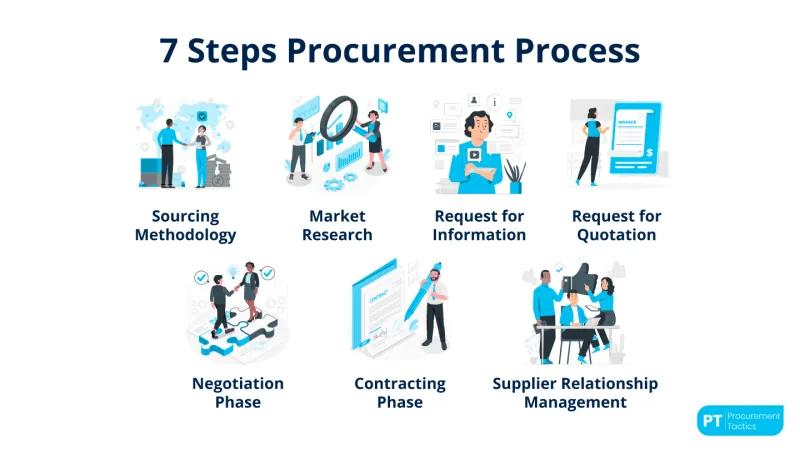
Photo: procurement team analyzing supplier network risk management strategy, via procurementtactics.com
There is a compelling logic to supplier consolidation that is difficult to argue with on paper. Fewer suppliers mean fewer relationships to manage, greater purchasing concentration to leverage in negotiations, reduced administrative overhead, and the kind of streamlined procurement governance that finance departments consistently advocate. When a procurement team presents a consolidation initiative, the projected savings are usually credible and the operational benefits are tangible.
What the business case rarely captures is what gets lost in the process — and why those losses tend to surface at precisely the moments when supply chain resilience matters most.
The Efficiency Trap
Consolidation creates efficiency through concentration. The same mechanism that generates volume-based pricing leverage also creates structural dependency. When a single supplier accounts for 70 or 80 percent of your spend in a given category, the relationship has shifted in ways that are not always reflected in the contract.
Your supplier knows, and your team knows, that switching costs are now substantial. The investment in onboarding, quality certification, process integration, and institutional knowledge makes the relationship genuinely difficult to exit — regardless of what the agreement's termination clauses say. That reality changes the negotiating dynamic in subsequent contract cycles, often gradually and almost imperceptibly. Price increases that might have triggered a competitive sourcing exercise when you had four qualified suppliers become easier to absorb when you have one.
This is not a theoretical concern. Procurement professionals who have managed categories through multiple consolidation cycles frequently observe that the savings delivered in year one of a consolidation initiative erode materially by year three, as the supplier's pricing power increases and the buyer's alternatives diminish. The efficiency gains were real; they were also temporary.
Single Points of Failure in Practice
The operational risk dimension of over-consolidation became dramatically visible during the supply disruptions of the early 2020s, when companies that had rationalized their supplier bases to achieve cost efficiency found themselves with no viable alternatives when primary suppliers encountered capacity constraints, raw material shortages, or logistical breakdowns.
But single points of failure do not require pandemic-scale disruptions to cause significant damage. A fire at a single-source supplier's production facility, a labor dispute at a critical distribution center, a quality hold that pulls a primary supplier's product from the market — any of these events, none of them extraordinary in a long enough time horizon, can create supply interruptions that a more diversified portfolio would have absorbed without incident.
The insidious aspect of consolidation risk is that it builds gradually and invisibly. No single decision to reduce from three suppliers to two seems catastrophic. The vulnerability emerges cumulatively, and it is rarely visible in standard procurement reporting until it manifests as a crisis.
Organizational and Psychological Drivers of Over-Consolidation
Understanding why procurement organizations consistently consolidate past the point of optimal risk balance requires examining the incentive structures and cognitive biases that shape those decisions.
Procurement performance metrics in most organizations reward cost reduction and process efficiency, not resilience maintenance. A procurement manager who maintains a secondary supplier at modest volume — preserving optionality and competitive pressure — is effectively paying an insurance premium that does not appear as a line item in cost-savings reporting. The value of that premium is invisible until the moment it is needed. The cost is visible every quarter.
There is also a relationship dynamic at play. Extended supplier relationships generate familiarity, trust, and genuine mutual investment. Procurement teams that have worked closely with a supplier over many years develop a reasonable preference for continuity. What begins as relationship management can quietly become reluctance to introduce competitive tension — even when the business case for doing so is clear.
Finally, consolidation initiatives frequently originate in finance or executive leadership rather than in procurement operations, driven by a desire for headline savings that may not fully account for the risk implications. Procurement teams that lack the data or organizational standing to push back on consolidation targets may implement them even when their operational judgment suggests the concentration is excessive.
Finding the Optimal Portfolio Balance
The objective is not to maximize the number of suppliers — complexity for its own sake creates its own costs. The objective is to maintain a portfolio that delivers cost efficiency while preserving competitive tension and operational resilience.
A useful starting framework involves categorizing your spend by criticality and replaceability. For categories where supply disruption would cause immediate operational impact and where alternative sourcing would take weeks or months to establish, concentration risk deserves explicit management. A secondary supplier relationship — even at modest volume — represents a form of supply chain insurance whose value should be calculated explicitly, not assumed away.
For categories with lower criticality or shorter alternative-sourcing timelines, a higher degree of concentration may be entirely appropriate. The mistake is applying a uniform consolidation strategy across the portfolio without differentiating by risk profile.
Regular competitive benchmarking, even for categories where you do not intend to switch suppliers, serves a valuable function: it provides pricing reference points, maintains market awareness, and signals to incumbent suppliers that the relationship is not unconditional. The discipline of benchmarking costs relatively little and preserves negotiating leverage that consolidation otherwise erodes.
Bridging Efficiency and Resilience
The most effective procurement organizations treat supplier portfolio management as a dynamic discipline rather than a periodic rationalization exercise. They set concentration limits by category, review them regularly, and maintain qualified secondary relationships even when those relationships are not generating active volume.
This approach is not inefficient. It is a more sophisticated form of efficiency — one that accounts for the full lifecycle cost of supply disruption rather than optimizing exclusively for per-unit pricing. The organizations that emerged most effectively from recent supply chain disruptions were, almost uniformly, those that had resisted the most aggressive consolidation pressures and maintained broader supplier networks than their cost models strictly required.
Consolidation is a tool. Like any tool, its value depends entirely on how it is applied — and on the recognition that using it too aggressively can undermine the supply chain stability it was meant to support.