The Margin Leak You Haven't Found Yet: 5 Hidden B2B Costs Draining Your Procurement Budget
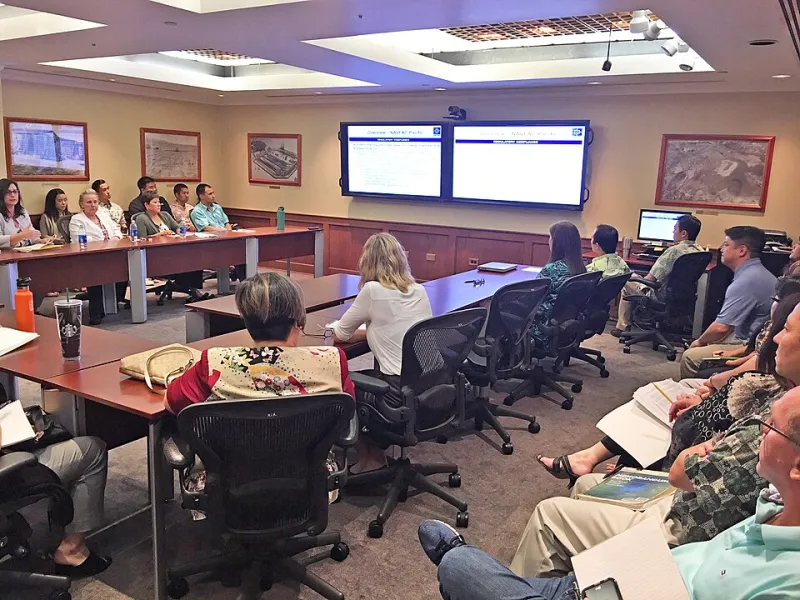
Photo: NAVFAC, CC BY 2.0, via Wikimedia Commons
When mid-market procurement leaders are asked to identify their biggest cost challenges, the answers tend to be predictable: raw material pricing, shipping volatility, and supplier lead times. These are legitimate concerns. But they are also visible concerns—line items that appear on invoices, get flagged in budget reviews, and receive executive attention.
The costs that are truly destroying B2B margins rarely appear on a single invoice. They accumulate quietly across dozens of daily workflows, embedded in the friction of fragmented systems, manual processes, and disconnected supplier relationships. By the time their impact becomes visible, they have already compounded into a significant drag on profitability.
For procurement teams operating in the $10 million to $250 million revenue range—a segment where operational efficiency has an outsized impact on competitive positioning—identifying and eliminating these hidden costs is one of the highest-return initiatives available. Here are five of the most consequential, and the strategies that leading businesses are using to address them.
1. Fragmented Vendor Management: The Cost of Too Many Relationships
Maintaining procurement relationships across 20, 30, or even 50 separate suppliers may feel like risk diversification. In practice, it is often a significant cost center masquerading as strategy.
Each vendor relationship carries administrative overhead: onboarding documentation, contract management, separate invoicing processes, distinct communication channels, and individualized performance tracking. Research consistently indicates that procurement teams spend between 30 and 40 percent of their time on supplier administration rather than strategic sourcing activity.
Beyond labor costs, fragmented vendor portfolios inhibit purchasing leverage. A company spending $500,000 annually across 30 suppliers has far less negotiating power than one consolidating equivalent spend across 10 to 12 strategic partners.
The fix: Businesses that have migrated to consolidated B2B marketplace platforms report meaningful reductions in vendor management overhead. By centralizing supplier discovery, qualification, and transaction management within a single environment, procurement teams have recovered an average of 8 to 12 hours per week per buyer—time redirected toward higher-value sourcing activities. Volume consolidation on these platforms has also yielded improved pricing terms, with some mid-market buyers reporting unit cost reductions of 6 to 11 percent following supplier rationalization.
2. Redundant and Excess Inventory: The Working Capital Trap
Inventory is frequently the largest single item on a mid-market company's balance sheet. It is also one of the most mismanaged. Without real-time visibility into stock levels across locations—and without reliable supplier lead time data—procurement teams tend to over-order as a hedge against uncertainty.
The financial consequences extend well beyond storage costs. Excess inventory ties up working capital that could otherwise fund growth initiatives, creates write-off risk as products become obsolete, and inflates insurance and handling expenses. Industry benchmarks suggest that carrying costs for excess inventory typically run between 20 and 30 percent of inventory value annually.
The fix: Integrated supply chain platforms that connect procurement systems with live supplier inventory data and predictive demand analytics allow businesses to right-size their stock positions. Companies that have implemented these tools report reductions in average inventory carrying costs of 15 to 22 percent, with corresponding improvements in cash flow and working capital efficiency. The key is replacing assumption-based ordering with data-driven replenishment tied directly to actual consumption patterns and verified supplier availability.
3. Poor Payment Terms Negotiation: Leaving Cash Flow on the Table
Payment terms are among the most impactful and most underutilized levers in B2B procurement. Yet many mid-market companies accept supplier-standard terms—Net 30, Net 45—without negotiation, leaving substantial cash flow optimization opportunities unrealized.
The cost of suboptimal payment terms is bidirectional. Paying too quickly on invoices that don't carry early-payment discounts reduces available working capital. Paying too slowly on invoices that do carry discount opportunities—typically 1 to 2 percent for payment within 10 days—means forgoing annualized returns that can exceed 18 to 36 percent when calculated against the cost of capital.
The fix: Procurement teams operating through consolidated marketplace platforms gain both visibility into payment term structures across their supplier portfolio and access to dynamic discounting tools that automate early-payment optimization. Several mid-market businesses have reported recovering 1.5 to 2.5 percent of annual procurement spend simply by systematically capturing available early-payment discounts—an improvement that flows directly to the bottom line with no change in sourcing strategy.
4. Supply Chain Visibility Gaps: The Hidden Tax on Agility
When procurement teams lack real-time visibility into order status, shipment location, and supplier fulfillment performance, they compensate with buffer inventory, expedited shipping, and reactive problem-solving. Each of these compensatory behaviors carries a direct cost.
Expedited freight premiums alone can run 40 to 300 percent above standard shipping rates. When these charges are incurred reactively—because a shipment delay wasn't identified until it became a production or fulfillment crisis—they represent pure waste. Similarly, the labor cost of manual status inquiries, exception management, and supplier follow-up is rarely captured in procurement cost analyses, even though it can represent a meaningful percentage of total operational overhead.
The fix: End-to-end supply chain visibility, delivered through platforms that integrate order management, supplier communication, and logistics tracking in a unified interface, eliminates the information gaps that drive reactive spending. Businesses that have implemented these capabilities report reductions in expedited freight expenditure of 25 to 40 percent, as well as measurable decreases in the labor hours devoted to exception management. Proactive exception alerts—rather than reactive discovery—fundamentally change the economics of supply chain disruption.
5. Manual Order Processing: The Efficiency Drain That Scales Against You
For many mid-market procurement operations, the purchase order process remains substantially manual. Requests are submitted via email, approvals are tracked in spreadsheets, and order confirmations are reconciled by hand against supplier acknowledgments. At low transaction volumes, this approach is merely inefficient. As transaction volumes grow, it becomes a genuine operational constraint.
The fully loaded cost of a manually processed purchase order—including the labor time of the buyer, approver, accounts payable team, and any exception handling—typically ranges from $50 to $200 per transaction. For a company processing 500 purchase orders per month, that represents $25,000 to $100,000 in monthly administrative cost before a single unit of product is received.
The fix: Automated order processing, enabled by B2B platforms that support electronic purchase order transmission, automated supplier acknowledgment, and three-way matching of POs, receipts, and invoices, has consistently demonstrated cost reductions of 60 to 80 percent per transaction. Beyond direct cost savings, automation reduces error rates, accelerates cycle times, and frees procurement staff to focus on strategic supplier development rather than transactional administration.
The Compounding Effect of Consolidated Commerce
Addressed individually, each of these cost categories represents a meaningful improvement opportunity. Addressed collectively—through a unified approach to supplier network management and transaction processing—their impact compounds significantly.
Mid-market businesses that have implemented consolidated B2B marketplace solutions report aggregate operational efficiency improvements ranging from 8 to 15 percent of procurement spend. For a company with $20 million in annual procurement activity, that range translates to $1.6 to $3 million in recovered value—capital that can be reinvested in growth, returned to shareholders, or deployed as a competitive pricing advantage.
The hidden costs described above are not inevitable features of B2B commerce. They are symptoms of fragmentation—of procurement operations built on disconnected tools, siloed relationships, and manual workflows. Bridging those gaps is precisely what modern supply chain platforms are designed to accomplish.
At SupplyBridge, we believe that streamlined commerce isn't a technology upgrade. It's a strategic imperative for businesses that intend to compete effectively in an increasingly demanding market environment.